NVIDIA Jetson Orin Nano: Benchmarking Edge AI Performance
We put the entry-level AI powerhouse through robotics and industrial vision workloads to see where its performance claims hold up.
By YDT Editorial3 min read
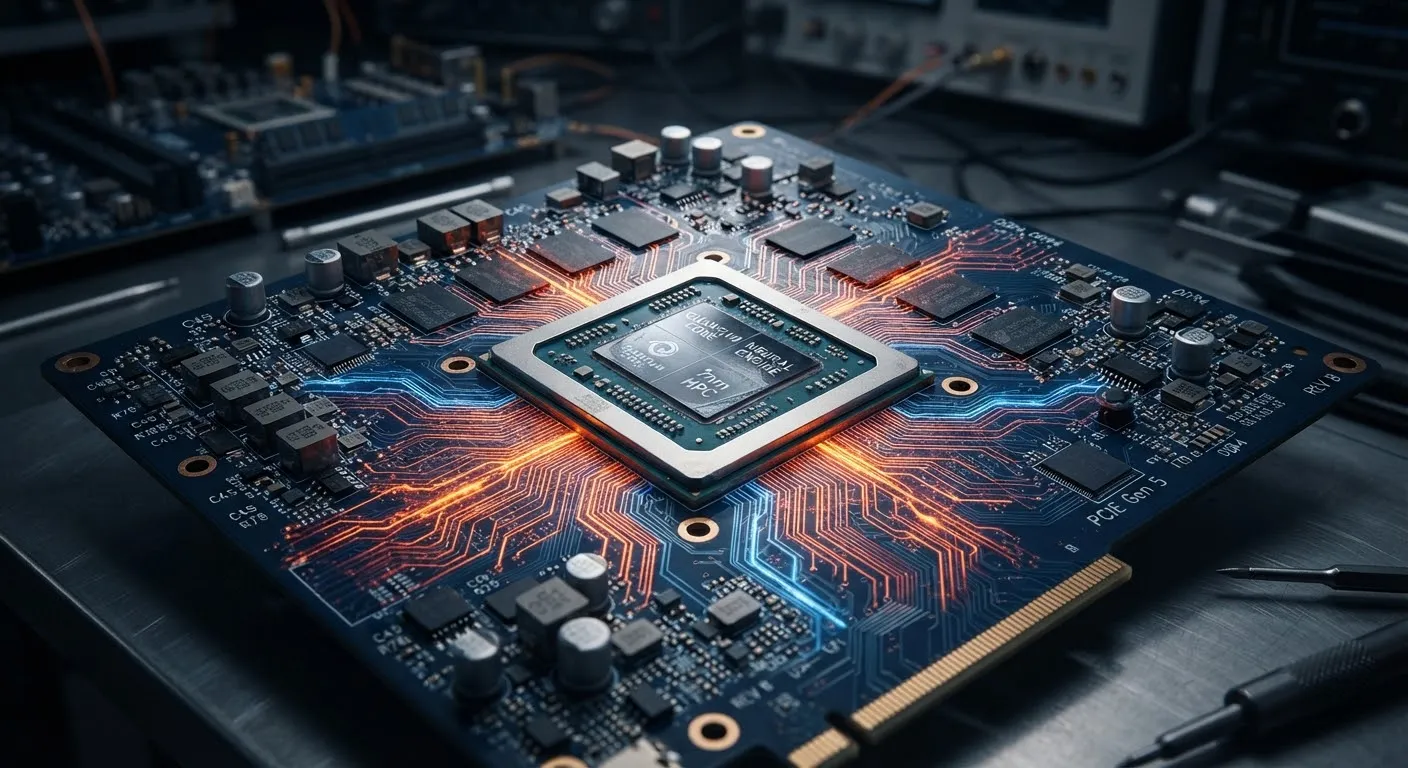
The Jetson Orin Nano occupies a strategic slot in NVIDIA’s lineup: cheap enough for volume products, capable enough to run modern perception stacks. After several weeks of testing against real industrial vision and robotics workloads, the picture is clear — with caveats that matter for product planning.
Test methodology
We evaluated three representative workloads: multi-stream object detection (four 1080p camera feeds through a YOLO-class network), stereo depth estimation for bin-picking, and a ROS 2 navigation stack with online costmap updates. All tests ran from the production power modes rather than the unconstrained developer settings, because thermal reality is what ships.
Results
Sustained inference throughput lands close to the marketing numbers as long as the model fits the memory budget — the shared RAM between CPU and GPU is the real constraint. Four detection streams ran comfortably in the 15 W envelope with headroom for tracking logic. Depth estimation exposed the sharper edge: memory bandwidth, not compute, throttled the pipeline once batch sizes grew.
Thermals deserve attention. With the stock thermal solution in a 25 °C ambient, sustained mixed workloads held clocks without throttling. Inside an enclosed industrial housing at 40 °C, we measured a meaningful clock reduction within twenty minutes — plan the thermal design around sustained load, not benchmark bursts.
Software experience
JetPack remains the platform’s decisive advantage. TensorRT optimization, hardware video decode integrated with the inference pipeline, and mature ROS support mean the path from model to deployed product is shorter here than on any competing edge platform we have tested. The flip side is lock-in: porting a TensorRT-optimized pipeline elsewhere is a project, not a task.
Strengths and weaknesses
Pros
- Best-in-class software stack (JetPack, TensorRT, ROS support)
- Real-world inference close to advertised figures at 15 W
- Hardware video decode integrated with the inference pipeline
Cons
- Shared memory budget constrains multi-model pipelines
- Throttles in enclosed housings without a custom thermal design
- Deep TensorRT optimization means real platform lock-in
Where to buy
Verdict
For teams building vision-based products in the 10–25 W class, the Orin Nano is the pragmatic default. Budget alternatives win on price only if engineering time is free — which it never is.
Filed under
Related articles

AI & Computing2 min read
LLMs for Automated Verilog Generation
Generative AI is accelerating the RTL design cycle while creating new verification challenges. Where the tools genuinely help — and where they mislead.
Electronics18 min read
Function Generator vs Arbitrary Waveform Generator: What You Are Buying
Three names, two architectures: how DDS and point-by-point playback differ, what the labels hide, and how to read the architecture off a datasheet.
Electronics23 min read
How to Choose a Signal Generator: Getting the Signal You Asked For
How to turn a required stimulus into datasheet requirements: the load the instrument assumes, bandwidth against sample rate, reconstruction and vertical resolution.
Electronics22 min read
How to Choose a Multimeter: A Specification-Led Buying Guide
Choose a multimeter by the errors it introduces: burden voltage, input loading, AC bandwidth, safety category and accuracy on the reading you actually take.