Quantum-Resistant Protocols: A Practical Migration Guide
Post-quantum cryptography is now standardized. What engineers need to migrate today to protect long-lived data and firmware signing chains.
By YDT Editorial2 min read
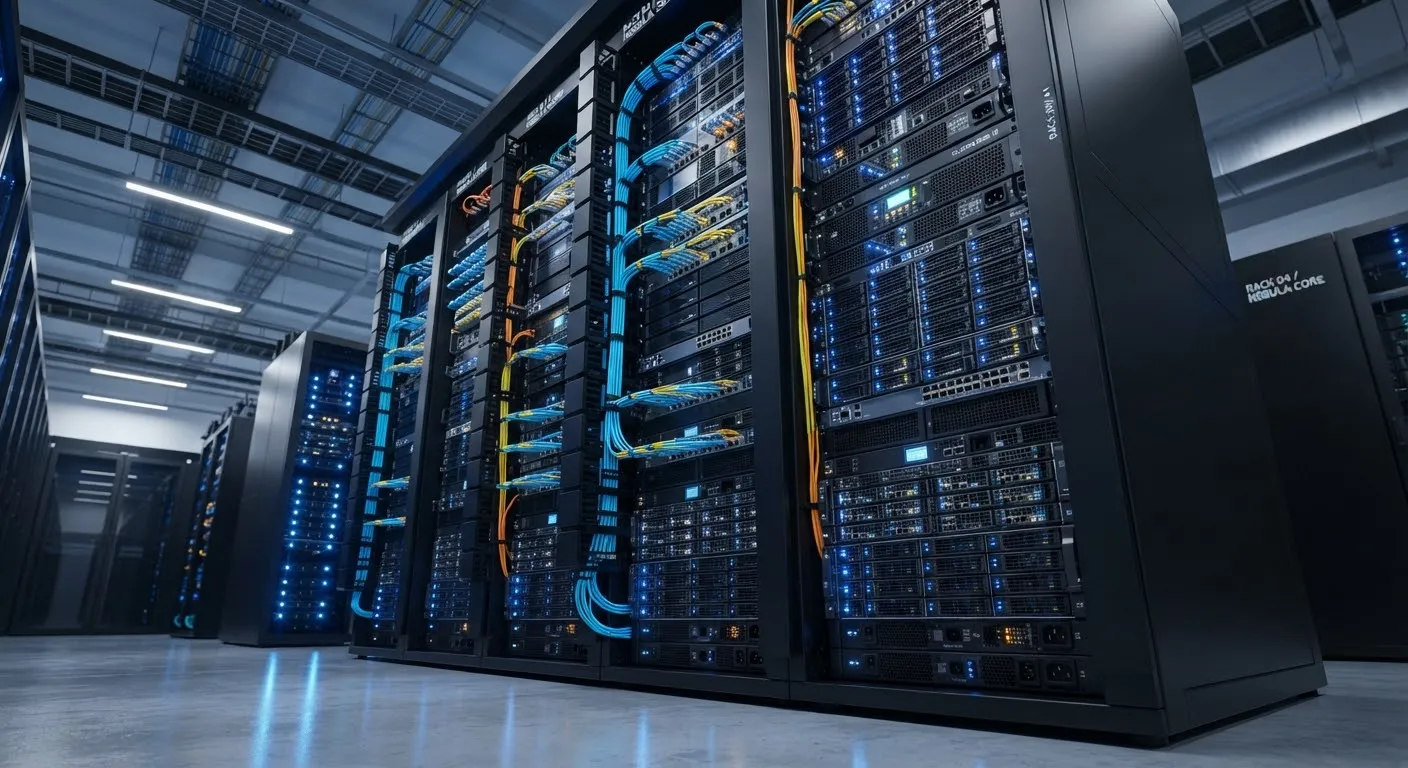
The question is not whether a cryptographically relevant quantum computer will exist — it is whether data encrypted today will still matter when one does. For medical records, industrial IP, and firmware signing keys with decade-long lifetimes, the answer is unambiguous. “Harvest now, decrypt later” makes migration a present-tense problem.
What is actually standardized
The NIST standards give engineers concrete targets: ML-KEM (Kyber) for key encapsulation, ML-DSA (Dilithium) for signatures, and SLH-DSA (SPHINCS+) as a conservative hash-based fallback. TLS 1.3 hybrid key exchange — combining classical elliptic-curve with ML-KEM — is already deployed across major browsers and CDNs, which means the server-side migration path is well trodden.
The embedded problem
General-purpose servers absorb post-quantum overhead easily. Constrained devices do not. ML-DSA signatures run to several kilobytes, and verification costs grow accordingly — painful for a secure bootloader verifying firmware in a masked ROM with tight SRAM. Hash-based signatures (LMS, XMSS) are the mature answer for firmware signing specifically: conservative security assumptions, modest verification cost, and already required by several government procurement profiles.
The state management burden of stateful hash-based schemes is real — sign twice with the same leaf and security collapses. Treat the signing infrastructure, not the device, as the engineering problem: HSM-backed counters and audited signing ceremonies.
A migration sequence that works
Inventory first: find every place a key is generated, stored, or verified, and record its required lifetime. Prioritize by exposure — anything crossing the public internet with long-lived confidentiality needs hybrid key exchange now; firmware signing chains need a post-quantum path before the next hardware generation locks its ROM. Then demand crypto-agility from every new design: algorithm identifiers in formats, key sizes with headroom, and update paths that do not require silicon respins.
Filed under
Related articles
Electronics18 min read
Function Generator vs Arbitrary Waveform Generator: What You Are Buying
Three names, two architectures: how DDS and point-by-point playback differ, what the labels hide, and how to read the architecture off a datasheet.
Electronics23 min read
How to Choose a Signal Generator: Getting the Signal You Asked For
How to turn a required stimulus into datasheet requirements: the load the instrument assumes, bandwidth against sample rate, reconstruction and vertical resolution.
Electronics22 min read
How to Choose a Multimeter: A Specification-Led Buying Guide
Choose a multimeter by the errors it introduces: burden voltage, input loading, AC bandwidth, safety category and accuracy on the reading you actually take.
Electronics16 min read
How to Use a Thermal Camera: Getting Readings You Can Trust
A thermal camera always shows a number. Learn the checks — emissivity, reflected temperature, focus and spot size — that decide whether it is a measurement.