Digital Twins in Large-Scale Infrastructure
Real-time simulation is changing how large industrial assets are maintained. What separates working digital twin deployments from dashboard theater.
By YDT Editorial2 min read
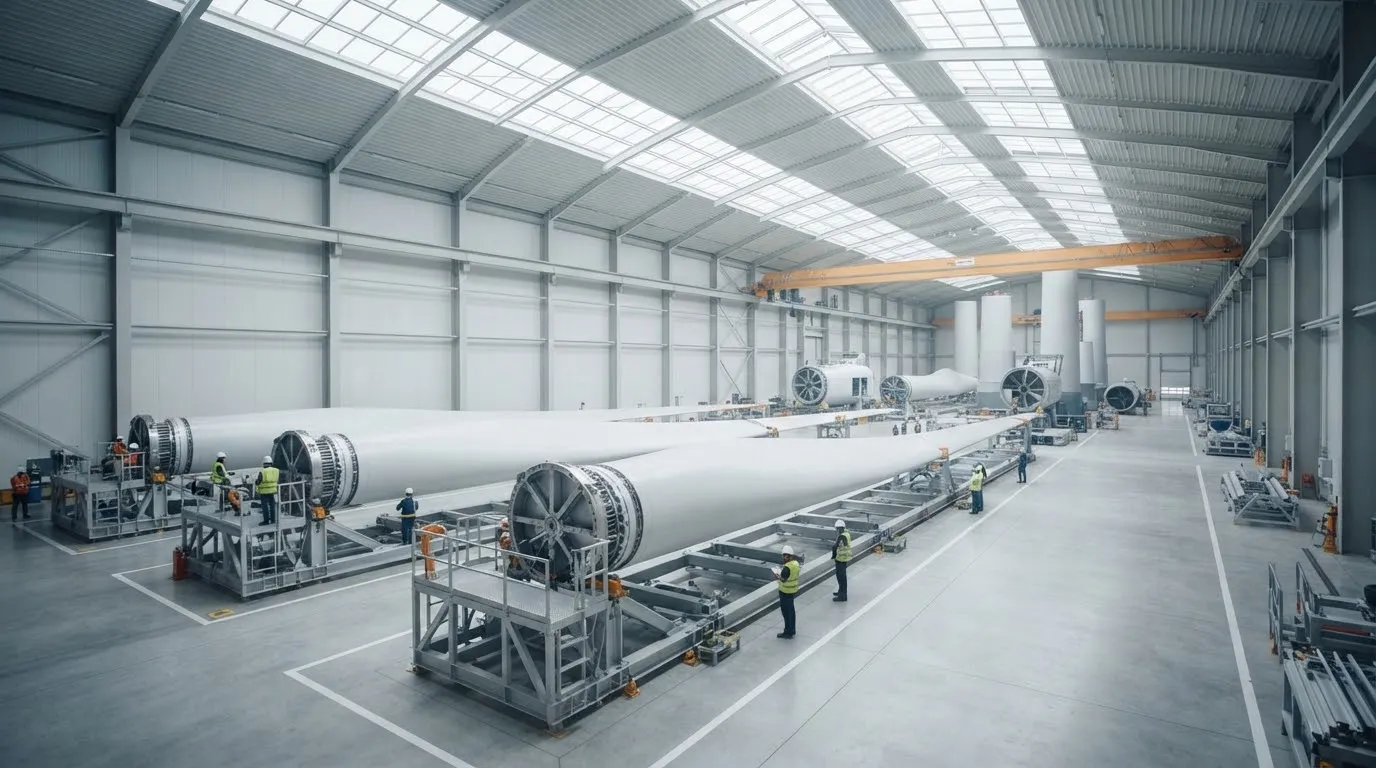
“Digital twin” has been diluted into meaning any 3D dashboard with live sensor overlays. The deployments delivering measurable returns are narrower and more disciplined: a physics-grounded model of a specific asset, continuously calibrated against telemetry, used to answer operational questions that would otherwise require shutting the asset down.
What a working twin actually contains
Production twins share three layers. A physical model — finite element, thermodynamic, or empirical — that encodes how the asset degrades. A state estimation pipeline that reconciles noisy sensor data against that model, flagging drift between predicted and observed behavior. And a decision layer that turns drift into maintenance actions with cost estimates attached.
The failure mode is skipping the middle layer. Raw telemetry plotted on a 3D model looks impressive and predicts nothing. The value lives in the residuals — the gap between what physics says the vibration spectrum should be and what the accelerometers report.
The offshore wind example
Offshore wind is the proving ground because the economics are stark: a jack-up vessel for unplanned maintenance costs a large multiple of the same intervention scheduled in a planned campaign. Operators running calibrated structural twins on monopile foundations report deferring inspection campaigns confidently when the model shows fatigue accumulation running below design assumptions — and moving early when localized drift says otherwise.
The same logic is spreading to substations, compressor stations, and rail infrastructure: anywhere the cost of unplanned intervention dwarfs the cost of instrumentation.
Where to start
The pragmatic entry point is one asset class, one failure mode, one decision. A twin that reliably answers “can this bearing run until the scheduled outage?” beats an enterprise platform that renders the whole plant in a browser. Scale comes from repeating narrow wins, not from buying breadth up front.
Related articles
Industrial Tech2 min read
The Future of Industrial Automation: Beyond the Robotic Arm
Edge computing and real-time AI are reshaping the architecture of the smart factory — from fixed automation lines to software-defined production.
Electronics18 min read
Function Generator vs Arbitrary Waveform Generator: What You Are Buying
Three names, two architectures: how DDS and point-by-point playback differ, what the labels hide, and how to read the architecture off a datasheet.
Electronics23 min read
How to Choose a Signal Generator: Getting the Signal You Asked For
How to turn a required stimulus into datasheet requirements: the load the instrument assumes, bandwidth against sample rate, reconstruction and vertical resolution.
Electronics22 min read
How to Choose a Multimeter: A Specification-Led Buying Guide
Choose a multimeter by the errors it introduces: burden voltage, input loading, AC bandwidth, safety category and accuracy on the reading you actually take.