Solid-State Batteries: The Realistic Roadmap
Ceramic electrolyte stability has improved fast, but manufacturing at scale remains the real obstacle between lab cells and mass-market packs.
By YDT Editorial2 min read
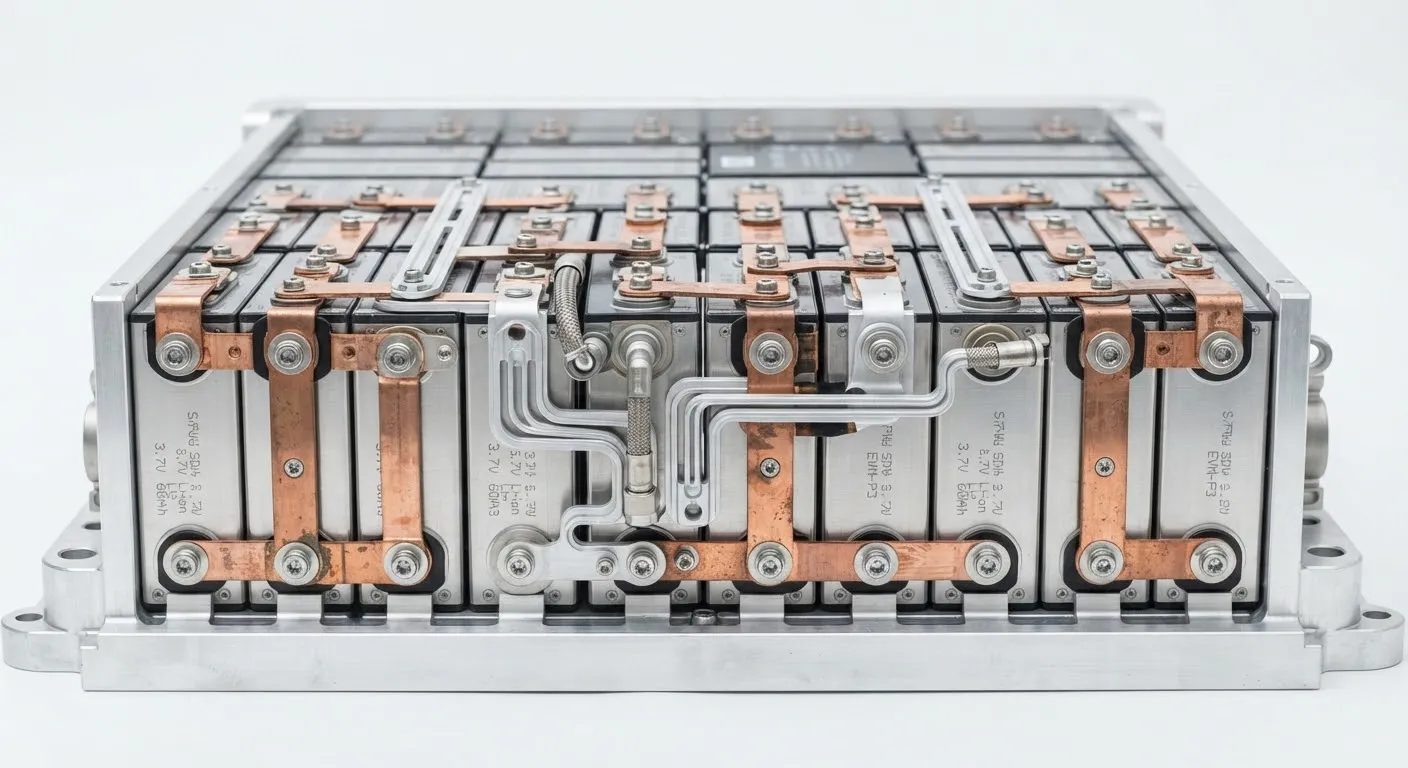
Solid-state batteries have been “five years away” for fifteen years. What has actually changed recently is not the headline energy density — it is the boring metrics: cycle life at automotive temperatures, stack pressure requirements, and manufacturability of the electrolyte layer. Those are the numbers that decide whether a chemistry ships.
Where the chemistry stands
Sulfide electrolytes currently lead on ionic conductivity, approaching and in some formulations exceeding liquid electrolytes at room temperature. Their weakness is chemical: sensitivity to moisture during processing, which forces dry-room manufacturing at a scale the battery industry has never operated. Oxide ceramics are far more stable but brittle, demanding either high-temperature sintering or composite designs that dilute their advantages.
The pragmatic middle ground gaining momentum is the semi-solid or hybrid cell: a thin polymer-ceramic separator with minimal liquid content. It sacrifices some of the theoretical safety and density gains for a process that existing gigafactories can adapt to.
The anode question
Lithium-metal anodes are the prize — they are why solid-state matters. But lithium plating behavior under fast charge remains the failure mode that ends programs. Dendrite suppression depends on uniform stack pressure and defect-free interfaces, both of which are trivial in a coin cell and brutal in a large-format automotive pack subject to vibration and thermal cycling.
Several manufacturers have quietly shifted their first-generation products to silicon-dominant anodes with a solid electrolyte instead. It is a smaller step, but one that banks real gains in energy density while the lithium-metal interface problem matures.
Reading the announcements critically
When evaluating solid-state claims, ask three questions: What is the cell format and capacity? What temperature and pressure does the quoted cycle life assume? And is the energy density measured at the cell or pack level? Answers to those three separate production engineering from investor theater.
Filed under
Related articles
Electronics18 min read
Function Generator vs Arbitrary Waveform Generator: What You Are Buying
Three names, two architectures: how DDS and point-by-point playback differ, what the labels hide, and how to read the architecture off a datasheet.
Electronics23 min read
How to Choose a Signal Generator: Getting the Signal You Asked For
How to turn a required stimulus into datasheet requirements: the load the instrument assumes, bandwidth against sample rate, reconstruction and vertical resolution.
Electronics22 min read
How to Choose a Multimeter: A Specification-Led Buying Guide
Choose a multimeter by the errors it introduces: burden voltage, input loading, AC bandwidth, safety category and accuracy on the reading you actually take.
Electronics16 min read
How to Use a Thermal Camera: Getting Readings You Can Trust
A thermal camera always shows a number. Learn the checks — emissivity, reflected temperature, focus and spot size — that decide whether it is a measurement.